
While Saudi Arabia, the United Arab Emirates and Qatar absorb most of the corporate attention paid to the Gulf, Oman has been quietly building a strategic position of its own. For a foreign company, the question is not whether the Sultanate is stable, but which part of its transformation it can take advantage of and how prepared it is when it enters
Its political stability, its distinctive foreign policy, its position facing the Strait of Hormuz and the Indian Ocean, and an ambitious economic diversification programme make Oman a market that belongs on the agenda of any company with interests in the Middle East. The opportunity, however, cannot be assessed without the risk. Oman is not simply an emerging market: it is a country sitting at the strategic intersection of Iran, Saudi Arabia, the United Arab Emirates, Yemen, India, the United States and the maritime routes connecting Asia, Africa and Europe. Understanding that reality is essential before investing, establishing operations or deploying people and assets in the country.
The argument of this analysis is straightforward: in Oman, the risk that matters to a foreign company is rarely an internal one. It is imported risk —maritime, logistical, energy-related and regional— that materialises through supply chains, insurance, mobility and critical infrastructure. That is why country risk assessment cannot stop at the Sultanate’s borders.
growth (2026)
as a share of GDP (end 2025)
free and industrial zones
under Oman Vision 2040
That territorial discontinuity is not a cartographic curiosity. Musandam makes Oman a littoral state of the most sensitive maritime chokepoint on the planet, facing the Iranian coast and just a few dozen kilometres from Bandar Abbas. Any risk assessment for a company operating in the Sultanate necessarily begins with understanding this geography.
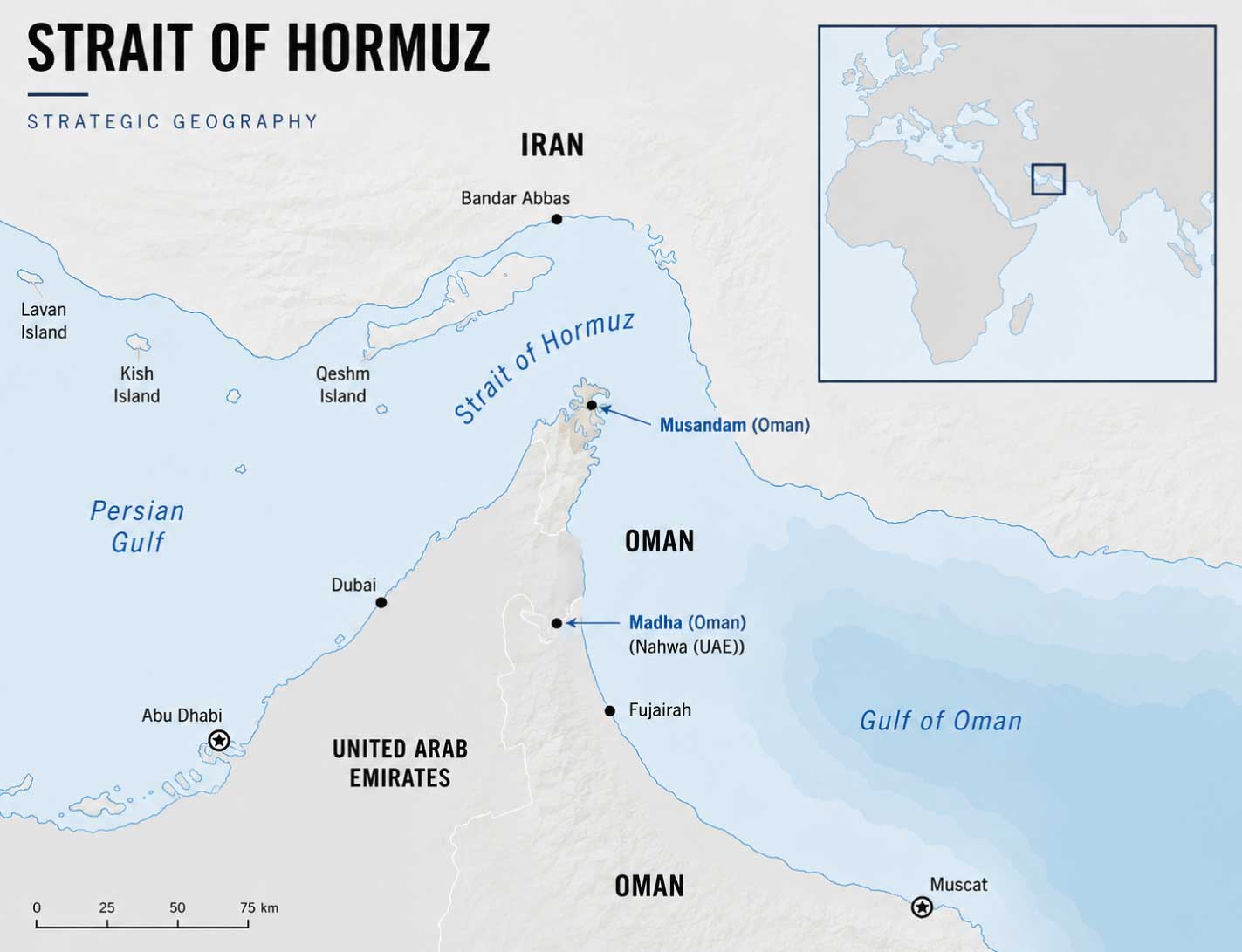
Source: own elaboration · ACK3® Global Hybrid SOC
The map sets out three operational realities at a glance: that Oman shares sovereignty over the Hormuz passage with Iran; that its territory is fragmented —beyond Musandam, the enclave of Madha, which itself contains the Emirati counter-enclave of Nahwa— which requires planning routes and border crossings in far more detail than a conventional political map would suggest; and that Muscat, Fujairah and the Gulf of Oman lie outside the strait itself, a circumstance that explains why Salalah and Duqm gain value precisely when Hormuz comes under strain.
“Many companies plan for Oman as though it were a continuous territory. It is not. Musandam and Madha impose mobility, permit and response considerations that have to be resolved at the planning stage, not once the team is already on the road.”
— Antonio García, Senior Operations Advisor (GPC), ACK3® · Travel Risk Management
A stable state in a strategic geography
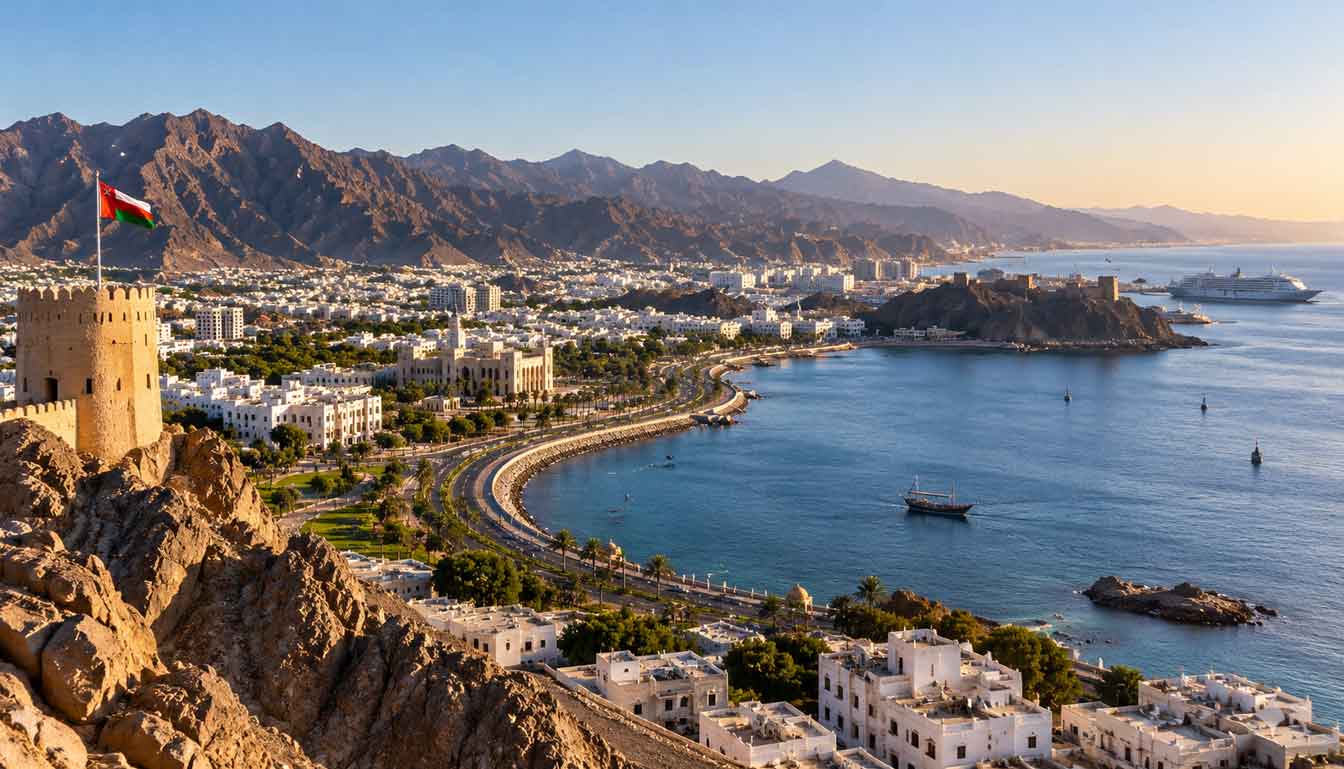
The Sultanate of Oman covers approximately 300,000 km² at the south-eastern tip of the Arabian Peninsula and has some 1,700 kilometres of coastline. It borders Saudi Arabia, the United Arab Emirates and Yemen, and projects its territory over the Gulf of Oman and the Indian Ocean. The Musandam enclave, separated from the rest of the country by Emirati territory, constitutes a singular position facing the Strait of Hormuz. In its capital, Muscat, the Al Bu Said dynasty has ruled since the eighteenth century. The transformation of contemporary Oman began in 1970 with the accession of Sultan Qaboos bin Said, who launched a far-reaching process of economic, administrative and social modernisation. Since 2020 the country has been led by Sultan Haitham bin Tariq, whose succession preserved institutional continuity without disruption. Omani stability is one of its principal assets. Unlike other regional settings, the country does not present a structural fracture between religious or ethnic communities capable of threatening its internal cohesion. Ibadi Islam, the majority tradition, has historically played an integrating role and is one of the elements that distinguish Oman from its two major strategic neighbours: Sunni Arabia and Shia Iran. For a foreign company, however, that stability should not be mistaken for simplicity. Omani society has a very particular economic and labour structure, with a substantial expatriate population and Omanisation policies aimed at increasing national participation in the labour market. Understanding institutional, business and social relationships is therefore as important as the financial analysis of the project.
Diplomacy as an instrument of power
Oman’s principal strategic distinction is its ability to keep channels of communication open with opposing actors. Muscat took part in neither the 2017 blockade of Qatar nor the military intervention in Yemen led by Saudi Arabia and the United Arab Emirates. For years it has acted as an interlocutor between Iran and the Arab monarchies, has participated in talks linked to the Iranian nuclear programme and has played a particularly relevant role in the search for a solution to the Yemeni conflict.
This balancing policy carries even greater value today. The relationship with Iran is strategic for both economic and geographic reasons: both are littoral states of the Strait of Hormuz and maintain energy and diplomatic cooperation mechanisms. In June 2026, Oman and Iran reaffirmed their commitment to the security of navigation through the strait and to continued dialogue. At the same time, Oman maintains a close security relationship with the United States and, most notably, with the United Kingdom, a country that has historically held a privileged position in the defence and training of Omani forces. That capacity to engage simultaneously with Washington, London and Tehran explains much of Muscat’s diplomatic relevance.
With Saudi Arabia and the United Arab Emirates, its two Gulf Cooperation Council neighbours, Oman maintains economic and security relations that have intensified as logistics and trade integration projects advance. With Israel, by contrast, it keeps a far more distant position and has not established full diplomatic relations. For Europe, the Sultanate’s relevance is also growing: in July 2026, the European Union and Oman signed the agreement to establish a permanent EU diplomatic mission in Muscat, with areas of cooperation including water, energy, infrastructure, logistics, food, minerals and maritime security. The business conclusion is clear: Oman does not need to align itself fully with any bloc in order to increase its strategic value. Its capacity to maintain simultaneous relationships with opposing interlocutors is precisely one of its principal assets.
The International Monetary Fund places Oman’s macroeconomic position among the soundest in the region following the fiscal consolidation begun in 2021, with a sustained reduction in public debt and non-oil sector growth gaining weight in the composition of GDP.
Spanish strategic analysis has consistently identified hydrocarbon dependence and the limited scale of the national defence industry as the Sultanate’s two structural vulnerabilities, in contrast with the solidity of its regional diplomatic balance.
An economy in transformation
For decades, oil financed Omani modernisation. But Oman holds smaller hydrocarbon reserves than its main GCC neighbours, which turns diversification into a strategic necessity rather than merely a political option. The current macroeconomic position is considerably stronger than the one that followed the 2014 oil price collapse: real GDP grew 2.4% in 2025, growth of close to 3.7% is projected for 2026, central government debt stood at 34.7% of GDP at the end of 2025 and inflation remains contained. The most interesting figure for the investor, however, is a different one: the growth of non-hydrocarbon activity. Tourism, construction, logistics, agriculture, fisheries and manufacturing are taking on increasing weight in the economy. The transformation also has an explicit roadmap, Oman Vision 2040, whose priority objective is to make the private sector, foreign investment, tourism, logistics, mining, industry and new energies the engines of growth.
Ports: the real geo-economic asset
Oman’s geographic position makes its port infrastructure one of its principal strategic assets. Sohar, Duqm and Salalah perform different and complementary functions, and reading them together explains the national strategy better than any isolated macroeconomic indicator.
| Location | Primary vector | Strategic reading |
|---|---|---|
| Sohar | Industry, metallurgy, petrochemicals and logistics | Its future rail connection with the United Arab Emirates will improve overland integration with Gulf logistics networks and reduce certain dependencies on transit through Hormuz. |
| Duqm | Energy, industrial, port and logistics hub | More than 6,300 million OMR in committed investment. Western, Asian and Omani interests converge here: US and UK logistics capabilities alongside a growing Chinese economic presence. |
| Salalah | Transit and transshipment on the Indian Ocean | A privileged position outside Hormuz, with direct exposure to maritime security in the Arabian Sea and the Gulf of Aden. |
| Musandam | Maritime enclave facing Hormuz | Discontinuous territory whose strategic value is disproportionate to its size and economic activity. |

Source: own elaboration · ACK3® Global Hybrid SOC
The distribution on the map reveals the underlying logic of Omani strategy: Sohar operates within the area of influence of Hormuz, while Duqm and Salalah sit deliberately on the Arabian Sea and the Indian Ocean, outside the strait. This is no accident. That geographic dispersion is in itself an instrument of resilience: it allows the Sultanate —and the companies established in it— to maintain export and import capacity even if passage through Hormuz is compromised. No other Gulf Cooperation Council state has that alternative within its own territory. The importance of this infrastructure goes beyond economics. Ports, energy terminals, free zones, roads and future rail connections are critical infrastructure whose security carries a directly geopolitical dimension. Duqm is the clearest illustration: the convergence of US and Chinese interests in a single space may turn it into a sensitive point over the medium and long term, with practical implications for any international operator established there.
Mining, hydrogen and the new energy economy
Diversification is not confined to logistics. Oman holds significant mineral resources —gold, chromite, copper, iron, cobalt, zinc, aluminium, gypsum, marble, limestone and potash, among others— several of them essential to the supply chains linked to renewables, batteries, electric vehicles and power grids. This will make the country a relevant supplier of raw materials and, above all, a platform for adding industrial value to those resources. The second major vector is renewable energy. Oman aims to develop a green hydrogen and derivatives industry, drawing on its exceptional solar and wind resources and its maritime position to export transformed energy to Europe and Asia. Progress is tangible: green hydrogen and ammonia projects are under development in Duqm, and facilities related to the production of materials for solar energy are being established in Sohar. For the international supplier, this opens a window in engineering, water, EPC, operations and maintenance, and across the entire layer of site security and operational continuity these projects require from the construction phase onwards.
Tourism and investment: from the standalone hotel to the integrated destination
Here lies a particularly attractive opportunity for international companies. Oman does not need to compete with Dubai in mass urban tourism: its comparative advantage is precisely the opposite —nature, exclusivity, heritage, coastline, mountains, desert and low tourist density—. The national strategy aims to reach approximately 11 million annual visitors by 2040, built on quality tourism, cultural heritage, nature and high value-added experiences.
The shift in model is what really matters: government strategy is moving from standalone hotel establishments towards integrated tourism destinations capable of combining accommodation, residential space, marinas, waterfront urban development, dining, entertainment and distinctive experiences. Muscat currently concentrates much of that transformation, with projects such as Al Mouj Muscat, Port Sultan Qaboos, Madinat Al Irfan, Yiti Sustainable City and AIDA, joined by Tilal Al Qurum —with investment of approximately 230 million OMR— and the future Al Bustan tourism complex.
In Dhofar and Salalah the opportunity has a different and complementary profile: coastline, mountains, heritage, biodiversity, frankincense culture and the Khareef monsoon phenomenon. The development of Hawana Salalah, the new hotel projects in Mirbat, the future Boulevard Al-Radhadh district and visitor infrastructure at sites such as Wadi Dawka and Sumharam point towards turning Dhofar into a year-round international destination, reducing the seasonality associated with the monsoon.
To this is added one of the country’s most differentiating assets: nature, adventure and off-road tourism. Oman allows itineraries combining mountains, wadis, coastline and markedly different desert ecosystems, from the red and golden dunes of Sharqiyah/Wahiba Sands to the white dunes of Al Khaluf beside the sea, the salt flats of Umm as Samim and the landscapes of the Rub al Khali. It is probably the segment where an operator with experience in destination management and specialised operations has the most to contribute and the least established competition in front of it.
Where each opportunity sits: a reading by territory
This is an indicative reading by territory. It does not replace a project-by-project feasibility analysis, but it illustrates why speaking of “the Omani market” in the singular is misleading.
| Territory | Horizon | Opportunity profile |
|---|---|---|
| Muscat | Immediate | Greatest volume and stability. Integrated developments, upscale hospitality, facility management, dining, events, MICE tourism and corporate services. |
| Dhofar and Salalah | Short-medium | Expansion of the offer outside the monsoon season: ecotourism, adventure, tourist transport and assistance and emergency management services. |
| Duqm | Medium-long | Convergence of tourism, port, industry, logistics and energy. Growing demand for accommodation, business services, transport and corporate security. SEZAD incentives. |
| Al Hamra, Jebel Akhdar and Jebel Shams | Niche | Nature, mountain, adventure and wellness tourism. Smaller-scale projects with high value per unit. |
| Musandam | Niche | Maritime tourism, nautical activities and coastal establishments, with the operational particularity of its territorial discontinuity. |
“All this expansion generates a second layer of demand that many investors do not see until they are already inside: corporate and tourism security, site protection, business continuity, emergency assistance and secure transport. In Dhofar and Duqm that layer is being built right now, at the same time as the concrete.”
— Antonio García, Senior Operations Advisor (GPC), ACK3®
Oman and security: a stable market inside an unstable region
Oman is not the largest market in the Gulf. Its appeal lies in another dimension: political stability, geographic position, diplomatic capacity, strategic ports, mineral resources, energy transition and a national strategy with a 2040 horizon. But the country’s strategic risk cannot be assessed within its borders alone. Its proximity to Yemen, Iran and the Strait of Hormuz exposes it indirectly to regional conflict, maritime threats, logistical disruption, energy tensions and migratory movements from the Horn of Africa and Yemen. The Omani Armed Forces are oriented primarily towards territorial and maritime defence and maintain a historic relationship with the United Kingdom. The country has professional military capabilities, although it continues to depend substantially on foreign suppliers. For a foreign company, however, the most likely risk is not a direct attack, but one of these five indirect vectors.
| Risk vector | Exposure | Why it matters |
|---|---|---|
| Maritime security and navigation | High | Hormuz, the Arabian Sea and the Gulf of Aden condition the timelines, routes and insurance premiums of any project with an imported component. |
| Supply chain disruption | High | A regional delay translates into contractual penalties and cost overruns rarely anticipated in the initial financial model. |
| Regional energy volatility | Medium | It affects public spending, the tendering calendar and the actual pace of execution of major programmes. |
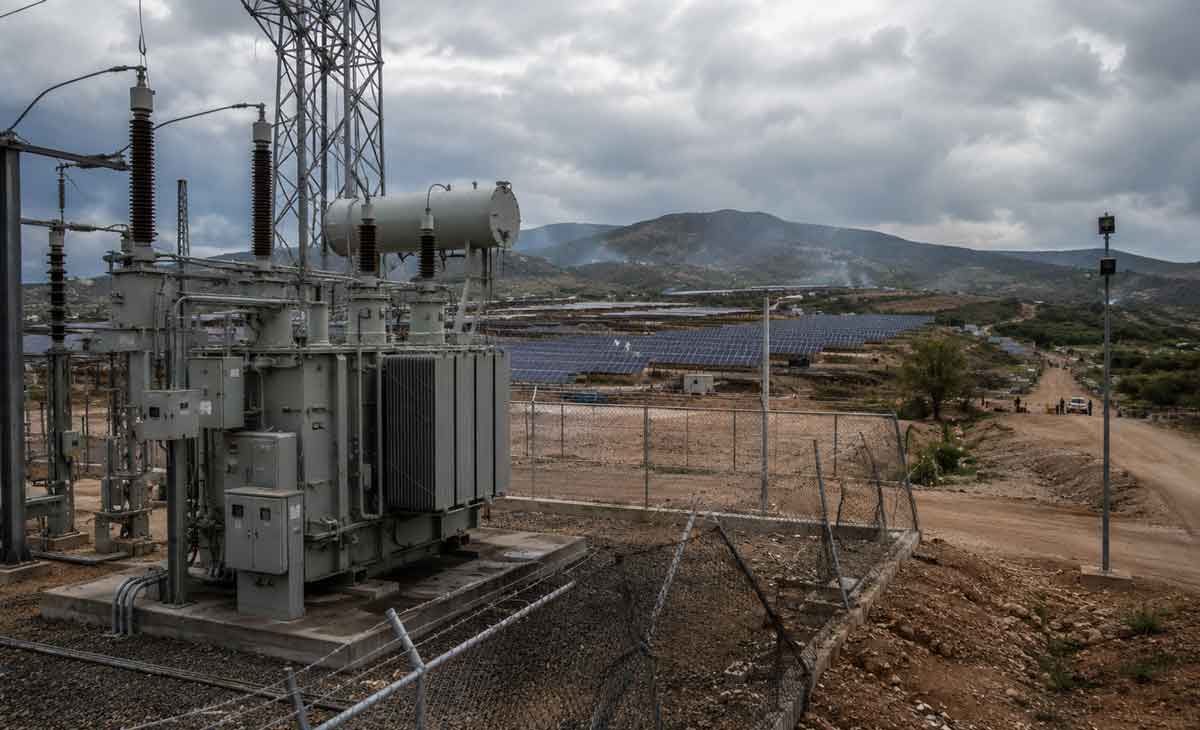
| Critical infrastructure and assets | Medium | Ports, terminals and free zones concentrate value and geopolitical visibility; protecting them is a requirement, not an extra. |
| Local partner and counterparty selection | High | It is the risk that most often decides the outcome of the operation, and the one that receives the least budget before signing. |
The most common framing error
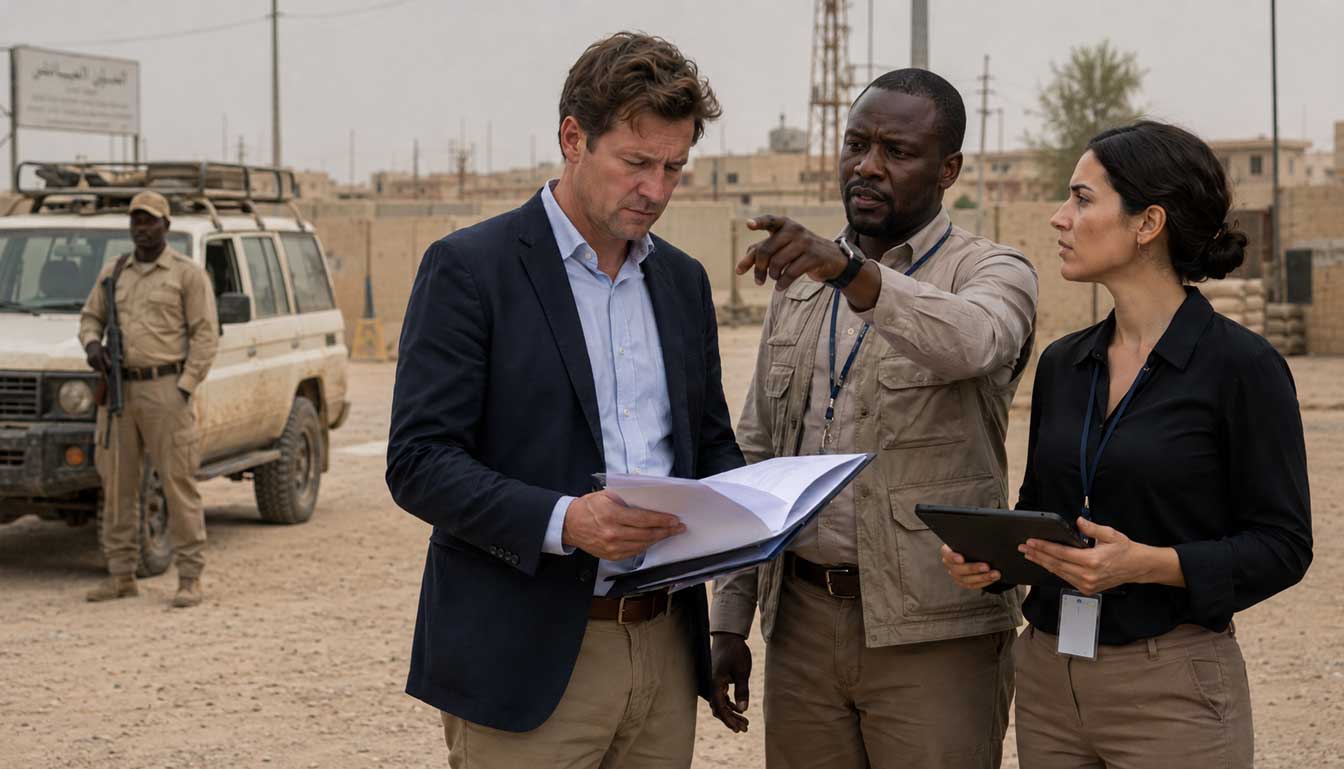
Mistaking stability for the absence of risk. Oman is probably one of the most stable countries in the Gulf, and precisely for that reason many companies enter with less preparation than they would deploy in a market perceived as hostile. Omani risk does not knock at the door: it arrives by sea, through the supply chain, through the insurance premium and through the partner who was not verified in time. Any project of a certain size should incorporate country risk analysis, business continuity, personnel and asset security and logistical resilience from the outset.
Opportunity demands intelligence first
Entering Oman requires more than capital and a sound commercial proposition. The selection of the local partner, agent, distributor or contractor; an understanding of the institutional environment; the identification of the real centres of decision and influence; the verification of corporate and reputational backgrounds; and the planning of the subsequent deployment are the factors that determine the success of the operation. In complex markets, the cost of getting it wrong at the start is usually far higher than the cost of investigating properly before entering.
“In Oman, due diligence is not a compliance formality: it is the business decision. Identifying who really decides, verifying backgrounds and understanding the structure of influence before signing costs a fraction of what it costs to unwind a badly chosen alliance two years later.”
— Antonio García, Senior Operations Advisor (GPC), ACK3® · Due Diligence
“When a company deploys teams to Duqm or Dhofar, the conversation changes immediately: routes, medical capacity, diplomatic representation, evacuation. That is not improvised on arrival. It is planned before the investment is committed.”
— Antonio García, Senior Operations Advisor (GPC), ACK3® · Crisis Management
For ACK3®, the experience accumulated in Saudi Arabia, the United Arab Emirates, Qatar and Oman makes it possible to approach the market by combining intelligence, security, regional knowledge and an operational understanding of the ground. Our work covers the identification, assessment and monitoring of political, geopolitical, economic and security risks, as well as the analysis of threats and vulnerabilities that may affect operations. For a company considering establishment or participation in projects in Oman, that support begins in the early phases of investment preparation —environment analysis, intelligence collection and processing, assessment of political, operational and security risks— and continues with environment monitoring, contingency planning and specialised support throughout the deployment.
Are you entering Oman with the intelligence that decision requires?
ACK3® supports international organisations before, during and after operational deployment in the Gulf: environment analysis, counterparty verification, personnel preparation and response capability on the ground.
| ACK3® Service | What it delivers in Oman |
|---|---|
| Strategic risk consulting | Country and regional risk assessment, market entry strategy, and threat and vulnerability analysis applied to the specific project. |
| Due Diligence and economic intelligence | Verification of local partners, agents, distributors and contractors; corporate and reputational backgrounds and the real decision-making structure. |
| Crisis management and business continuity | Scenario planning, escalation protocols, logistical contingencies and response to regional disruption. |
| Travel Risk Management and monitoring | Analysis by destination and route, 24/7 monitoring from our global SOC in Madrid and real-time alerts on the operating environment. |
| Specialised training (HEAT) | Preparation of personnel deployed to demanding environments: incident response, first aid in critical incidents and decision-making under pressure. |
| Mission Support Services | Operational support on the ground for projects and establishments in newly developed locations such as Duqm or Dhofar. |
In Oman, understanding the country is not a complement to the market entry strategy. It is part of it.