HSEM, HSES, and HPS accreditations are the key that unlocks access to sensitive contracts and multinational programs. Industrial safety is the requirement that determines who can participate in defense, aerospace, and critical security projects.
It’s not about bureaucracy, but about a trust system that ensures companies, facilities, and individuals comply with standards recognized by NATO, the European Defence Agency, and the European Space Agency.
What are the accreditations?
- HSEM (Company Security Clearance): Authorizes an organization to handle classified information and participate in high-level projects. It assesses internal policies, security governance, risk management, and relationships with third parties.
- HSES (Facility Security Clearance): Certifies that the premises meet physical and technological measures to safeguard classified information. It includes access control, video surveillance, restricted areas, and visitor protocols.
- HPS (Personnel Security Clearance): An individual accreditation that guarantees reliability and suitability of personnel. It requires background checks, confidentiality agreements, and ongoing training.
These three accreditations form an integrated system: the company, the facility, and the individual must be aligned to ensure total security.
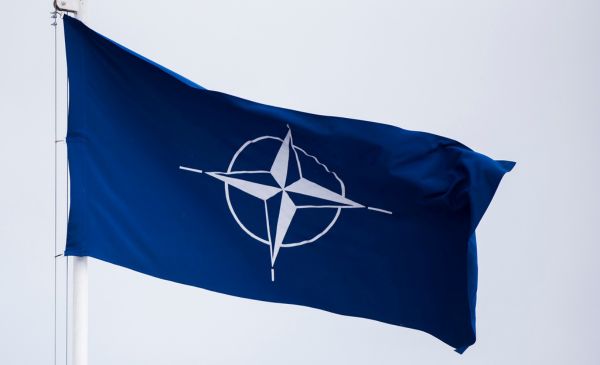
NATO and International Level
NATO requires equivalent clearances to access classified information, based on the principles of “need-to-know,” defense in depth, and traceability. European agencies apply similar protocols, enabling interoperability: a company cleared in Spain can collaborate on multinational projects with automatic recognition of its accreditations. This approach is not exclusive to the national level. In the allied environment, NATO demands equivalent clearances as a prerequisite for access to classified information, applying principles of need-to-know, defense in depth, and traceability.
Institutional experience shows that the most robust programs share a set of best practices: layered planning, access control under the principle of least privilege, document traceability, continuous training, and active third-party management. On this last point, European institutions emphasize that:
“Access to NATO classified information is conditioned on the existence of company, facility, and personnel security clearances, based on the principle of ‘need-to-know’ and a verifiable trust system among allies.”
— NATO, NATO Security Policy & Supporting Directives
Complementarily, European agencies apply harmonized protocols that enable interoperability. Thus, a company cleared in Spain can collaborate in multinational programs with recognition of its accreditations, as stated by the European Defence Agency:
“The European Defence Agency recognizes national security clearances as a key element to enable cross-border industrial cooperation and the participation of companies in multinational defense programs”
— European Defence Agencie (EDA), Framework for Security of Classified Information
How to access?
- Company (HSEM): Application to the National Security Office (NSO), providing evidence of policies, a security committee, and risk management.
- Facilities (HSES): Security audit of physical and technological measures, certifying restricted access areas and protection systems.
- Personnel (HPS): Individual process supervised by the National Intelligence Center (CNI), including interviews and verifications.
- CIS Systems: Additional accreditation for networks and systems that process classified information, ensuring cybersecurity and resilience.
The process includes diagnosis, design of controls, implementation, internal audit, formal application, and granting, with periodic reviews to maintain validity.
Best practices and common mistakes
- Layered plan: Integrate physical, technical, and organizational controls.
- Minimum access: Restricted permissions reviewed periodically.
- Traceability: Records and verifiable evidence.
- Continuous training: Education and drills.
- Third-Party Management: Agreements and audits for suppliers.
Common mistakes: Underestimating timelines, forgetting CIS accreditation, failing to define Restricted Access Zones (RAZ), or not rehearsing procedures.
Ultimately, HSEM, HSES, and HPS accreditations constitute the trust system that enables companies and professionals to operate in defense and aerospace. Integrated with CIS systems accreditation and supported by Restricted Access Zones, they transform industrial security into a true strategic capability. As stated by the European Commission
“Industrial security and the protection of classified information are strategic capabilities for Europe’s technological autonomy and a prerequisite for access to sensitive defense and aerospace programs.”
—European Comission, EU Security & Defence Policy Documents
HSEM, HSES, and HPS accreditations form the trust system that enables companies and professionals to operate in defense and aerospace. Integrated with CIS systems accreditation and supported by Restricted Access Zones, they turn industrial security into a true strategic capability: access to high-impact contracts, asset protection, and alignment with NATO and European standards.
Is your organization ready for NATO projects?
At ACK3, we help you manage HSEM, HSES, and HPS clearances, opening the door to strategic contracts.