We use the Internet every day with the feeling that we are navigating it in its entirety. However, what appears in search engines and social networks is only a superficial layer. Most of the digital ecosystem operates out of public view, in spaces designed to protect sensitive information and control access to data. This invisible frontier between the surface web and the deep web is not anecdotal: it shapes cybersecurity, corporate intelligence, and the real exposure of organizations. Confusing these two concepts leads to flawed assessments, hasty decisions, and a false perception of digital risk in an increasingly interconnected environment.
What is the deep web?
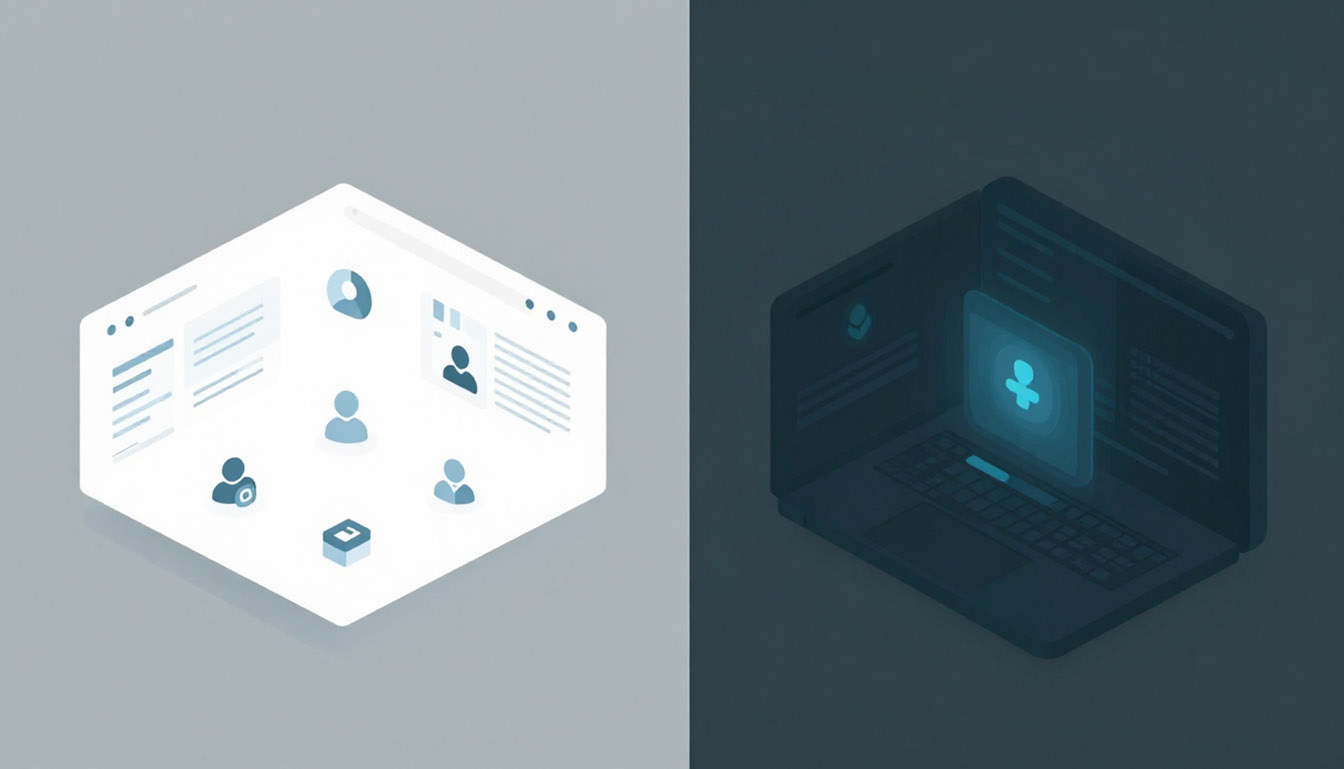
The deep web is the set of Internet content that is not indexed by conventional search engines. The fundamental distinction from the surface web is technical, not legal or ethical. It consists of information that can only be accessed through authentication, permissions, or specific routes. Emails, banking platforms, corporate intranets, databases, medical records, or enterprise management systems are part of this layer. Its function is clear: to ensure privacy, confidentiality, and control. Without the deep web, secure digital services and reliable business operations would not exist.
Mikko Hyppönen, Chief Research Officer of WithSecure, clearly differentiates the functional deep web from the criminal dark web:
“The deep web is where organizations store what truly matters. That is precisely why attackers focus on it.”
The technical frontier between the visible and the protected
The surface web includes public pages indexed by search engines and accessible without restrictions. It is the digital showcase: media sites, social networks, corporate websites, or blogs.
The deep web, on the other hand:
-
It does not appear in search engine results.
-
It requires credentials or authorization.
-
It hosts sensitive or strategic information.
-
It represents the majority of the total content on the Internet.
This difference explains why visibility does not equate to relevance, and why critical information is often outside the public spotlight.
The deep web is not the dark web
One of the most common mistakes is equating the deep web with illegal activities. The dark web is only a very specific portion of the deep web that uses specialized networks and tools to conceal identity and location. Most of the deep web is legal, necessary, and part of everyday life. Confusing the two concepts distorts risk analysis and fosters misleading narratives.
Implications for businesses and security
From a corporate perspective, the deep web is a strategic asset. It hosts:
-
Financial and operational data.
-
Personal and confidential information.
-
Internal intelligence and critical knowledge.
-
Essential systems for business continuity.
According to the European Union Agency for Cybersecurity (ENISA), many serious incidents originate in poorly protected internal environments, not on the visible Internet. The lack of governance, segmentation, and control turns the corporate deep web into a silent risk vector. In the same line, the World Economic Forum (WEF) states that the most severe digital vulnerabilities arise not from public exposure, but from the complexity of internal systems. The WEF frames internal digital environments as systemic risk factors for organizations and governments.
Economic intelligence and risk management
Understanding this invisible frontier allows organizations to:
-
Identify critical digital assets.
-
Reduce the exposure surface.
-
Detect information leaks before they escalate.
-
Design realistic cybersecurity and intelligence strategies.
It’s not about accessing more information, but about protecting the information you already have.