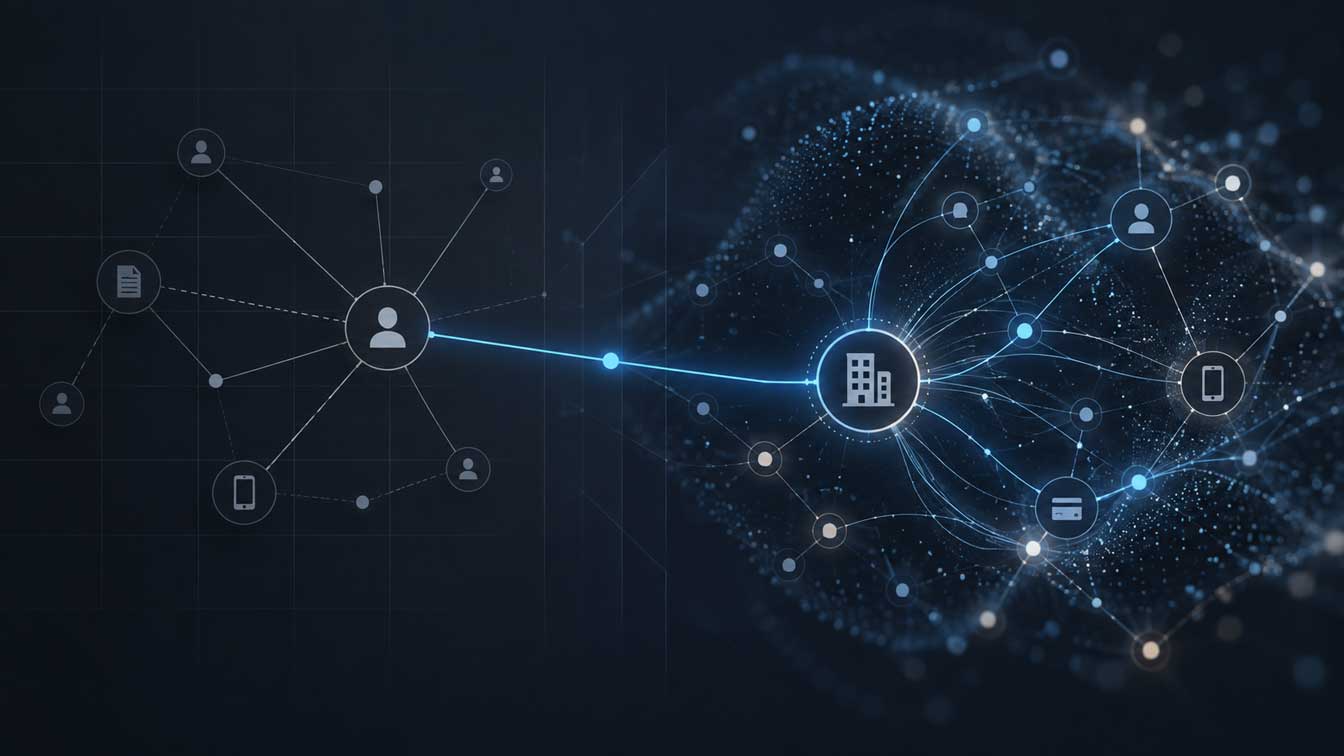

Organizations today operate in an environment marked by increasing geopolitical, regulatory, and operational complexity. The digitalization of the global economy and the proliferation of information sources have exponentially multiplied the volume of data available for strategic analysis. In this context, artificial intelligence and automated systems have become key tools for processing information, identifying patterns, and monitoring events in real time. Advanced analytics platforms make it possible to detect early warning signals of risk, ranging from regulatory changes to social tensions or disruptions in supply chains.
However, this growing technological capability raises a fundamental question for organizations: how to integrate these tools without losing the value of strategic judgment in decision-making. This is where the concept of Human in the Loop becomes relevant.
Human in the Loop: technology in service of decision-making
The Human in the Loop (HITL) model describes systems in which artificial intelligence participates in the analysis and processing of information, while final validation and key decisions remain under human supervision. This approach recognizes that technology can significantly expand organizations’ analytical capacity, but that interpreting context, evaluating scenarios, and making decisions still depend on human judgment. The Organisation for Economic Co-operation and Development (OECD) emphasizes in its principles on artificial intelligence that AI systems should be designed to allow meaningful human oversight, ensuring that automated decisions can be reviewed or corrected when necessary.
The impact of artificial intelligence on decision-making
The growth of artificial intelligence in the business sector has been particularly rapid in recent years. Organizations today use automated analytics tools to monitor geopolitical risks, identify regulatory changes, or detect early warning signals of disruption in markets and operations.
As explained by artificial intelligence researcher Andrew Ng, one of the world’s leading authorities in the field:
“AI is the new electricity.”
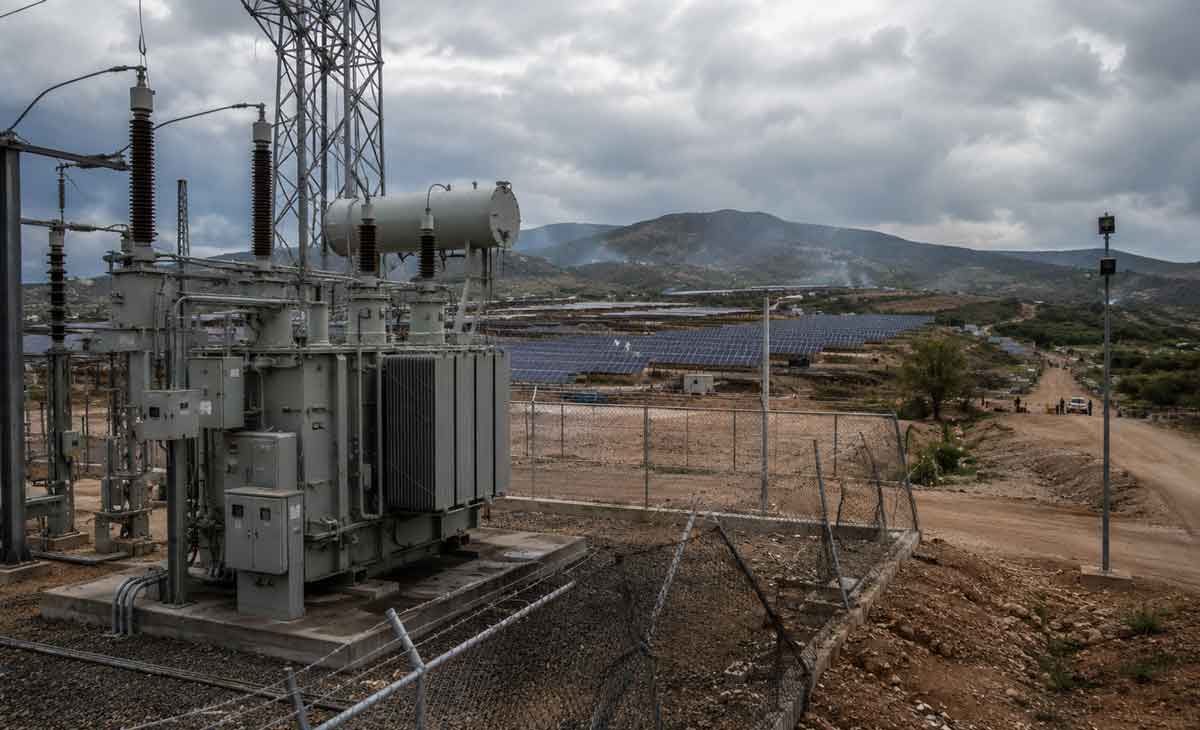
The comparison is no coincidence. Just as electricity transformed virtually every economic sector during the 20th century, artificial intelligence is beginning to integrate into multiple business processes, from logistics to strategic analysis. However, as with any major technological transformation, the real value does not lie solely in the technology itself, but in how organizations use that technology to enhance their decision-making.
The limitations of purely algorithmic analysis
Automated systems excel in tasks such as:
- Mass data processing
- Pattern recognition
- Anomaly detection
- Continuous information monitoring
However, when it comes to interpreting complex environments, algorithms present significant limitations. A country’s political developments, the dynamics of a regional crisis, or the reputational impact of certain events often depend on qualitative factors that are difficult to capture in purely algorithmic models.
According to the Stanford Institute for Human-Centered Artificial Intelligence, even in advanced artificial intelligence systems, human oversight remains essential in contexts where decisions have significant implications:
“Human oversight remains essential in high-stakes AI systems.”
Integrating technology and expert analysis
For this reason, more and more organizations are adopting hybrid models in which artificial intelligence acts as a multiplier of analytical capabilities, while human analysts continue to play a central role in interpreting information. In practice, automated systems can detect relevant events in a matter of seconds: regulatory changes, social tensions, logistical disruptions, or events with potential reputational impact. However, the real significance of this information depends on the context of each organization.
Assessing this impact requires understanding factors such as:
- The company’s exposure in a specific region
- The political or social evolution of the local environment
- The reputational sensitivity of the incident
- The operational implications for the organization
This process of contextualization is precisely what allows data to be transformed into useful insights for strategic decision-making.
The competitive advantage of contextual analysis
As artificial intelligence continues to evolve, access to advanced analytics tools is becoming more widespread. Increasingly, organizations have platforms capable of processing large volumes of information and generating automatic alerts. In this context, competitive advantage no longer lies solely in the technology, but in the ability to correctly interpret the available information and translate it into informed decisions. Organizations that succeed in integrating advanced technology with teams capable of contextualizing data, evaluating scenarios, and advising on decision-making will be better prepared to operate in global environments characterized by volatility and uncertainty.
Artificial intelligence is profoundly transforming the way organizations analyze the global environment. However, experience shows that technology alone does not guarantee better decisions. The Human in the Loop model reflects the need to combine the analytical capabilities of automated systems with human strategic judgment. In an increasingly complex international environment, the true competitive advantage lies in the ability to transform information into actionable knowledge for decision-making.