What is it that your policy does not calculate? Insurers, EPCs and infrastructure funds contract limits based on asset replacement value. But in political violence environments, the real risk is different — and almost nobody is measuring it correctly.
When a renewable energy project under construction takes out an SRCC/Terrorism policy, the insured limit is usually calculated on the replacement value of the physical assets. This is a necessary starting point. But in environments where the real risk is not accidental fire but coordinated sabotage, civil unrest or organised blockades, that calculation can be radically insufficient.
Probable Maximum Loss (PML) in terrorism, sabotage and political violence scenarios is not calculated the same way as in fire or natural catastrophe scenarios. The actor is intentional, selects the target, can coordinate multiple attacks and knows the vulnerabilities of the system. A PML analysis oriented to political risk requires scenario methodology, not standard actuarial modelling. That is the difference between a reasoned limit and an arbitrary one.
affect the energy sector (ENISA)
report intrusion attempts (ENISA, 2024)
globally in 2026
What PML in political risk really means — and why it matters
Probable Maximum Loss (PML) answers a specific question: if the worst reasonably plausible scenario occurs, how much can this project lose? In traditional property insurance, the answer is built on historical claims data, damage propagation models and replacement values. It is a robust methodology for fire, flood or earthquake. The problem arises when that same methodology is applied to terrorism, sabotage or political violence scenarios. In these cases, the agent causing the damage is not nature — it is an intentional actor with the capacity for choice, coordination and adaptation. It can select the most vulnerable asset, attack at the moment of greatest exposure, coordinate multiple simultaneous impact points and specifically exploit the weaknesses that standard models do not contemplate. The result is that many energy projects under construction in LATAM, Africa and the Middle East operate with insured limits calculated for a risk that is not the one they actually face. Not through negligence — but because PML analysis oriented to political violence requires a different methodology that most brokers and insurers do not apply by default.
“PML studies for terrorism and malicious risk require a radically different approach from natural hazards. The intentional actor chooses the target, the moment and the method — and that level of agency completely transforms the loss model.”
— Aon Crisis Management — Terrorism Probable Maximum Loss Studies
“The urgency for clean technologies cannot compromise the reliability of critical digitised infrastructure. Systems must be designed with rapid response capabilities, continuous updating and adaptation to new threats.”
The three most common errors in energy PML calculation
In our experience analysing energy infrastructure projects in LATAM and EMEA, we consistently identify three recurring patterns of error that generate uncovered exposure:
| Frequent error | What is assumed | What the real risk is |
|---|---|---|
| PML = replacement value | Maximum damage is total destruction of the physical asset | A low-cost sabotage to the transformer or substation can generate months of ALOP with minimal physical damage |
| Ignoring ALOP as the primary vector | Anticipated profit loss is secondary to material damage | In projects under construction, ALOP can exceed material damage if the delay affects start-up and energy sale contracts |
| Single loss scenario | The worst scenario is an isolated attack on a single project point | A coordinated actor can attack multiple points simultaneously — evacuation line, substation and equipment storage in the same operation |
| 72-hour clause ignored | Each incident is valued in isolation | The 72-hour clause in SRCC policies allows aggregation of coordinated incidents within a time window — which transforms total exposure |
| Static geopolitical context | The risk environment at project start is the same throughout construction | In LATAM, the risk profile can change radically in 12–18 months: elections, socio-environmental conflicts, judicial precedents |
The most underestimated asset: the power transformer
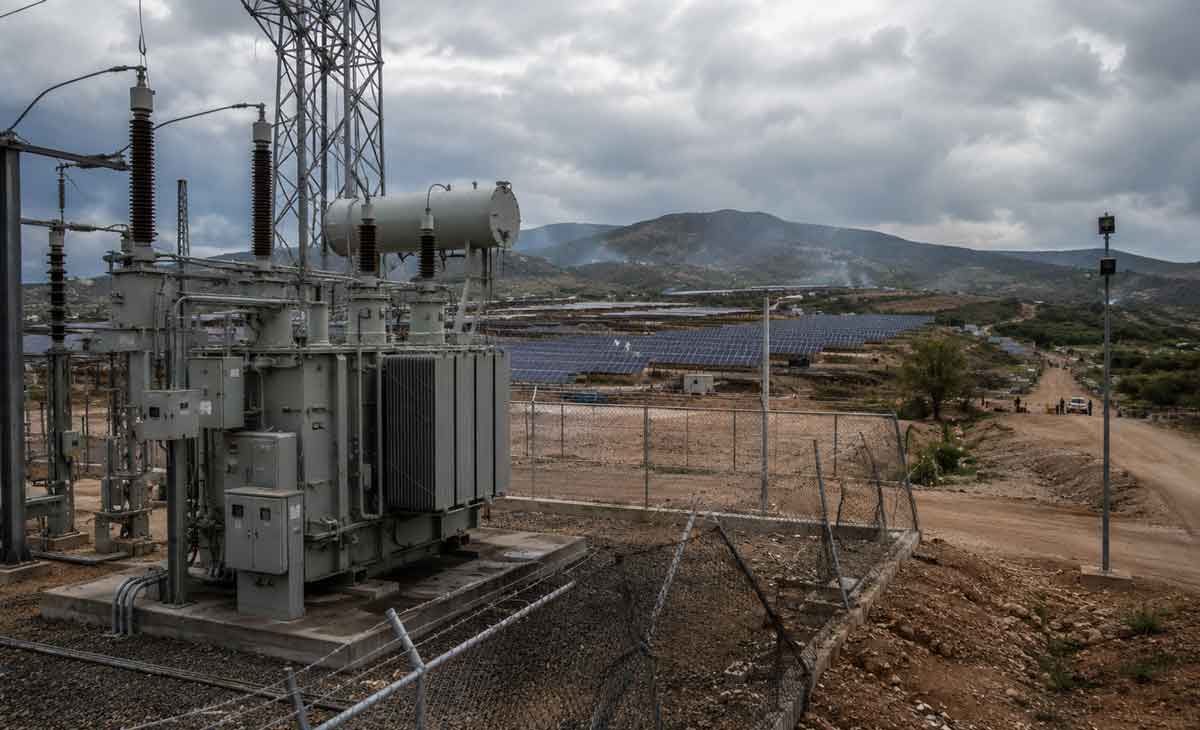
In most photovoltaic and wind projects, the real concentration of PML risk is not in the panels or turbines — it is in the high-voltage power transformer and the interconnection substation. It is the technical and logistical bottleneck of the project. A high-voltage power transformer can have a manufacturing and delivery lead time of between 12 and 24 months. There is no stock available. It is not manufactured locally. If it is destroyed — whether by sabotage, malicious damage or an incident arising from unrest — the impact is not the replacement cost of the equipment. It is that delivery lead time multiplied by the daily revenues the project was going to generate, plus contractual penalties with the electricity distributor and financial obligations with lenders. That is the real ALOP. And in many projects, that number far exceeds the joint limit contracted in the policy.
The question the broker does not ask
How long would it take to replace the most critical asset in this project if it were intentionally destroyed? How much would that delay cost in terms of lost revenue, contractual penalties and financial obligations? The answer to those two questions is the real PML in a political violence scenario — and it rarely coincides with the insured limit.
LATAM 2026: the context that makes this analysis urgent
Political and violence risks globally have reached an all-time high in 2026. In Colombia, business associations identify road blockades and sabotage of critical infrastructure as the primary operational threat for companies. In Paraguay, cable theft, vandalism and the presence of armed groups in renewable development zones are documented risks. In Guatemala, socio-environmental conflicts linked to energy projects have judicial precedents that can paralyse operations for years.
In this context, any energy infrastructure project under construction in LATAM that does not have a specific PML analysis for terrorism, sabotage and SRCC scenarios is operating with an unquantified exposure — and therefore, an unmanaged one.
“Political and violence risks reach all-time global high in 2026. Alert in Colombia over commercial paralysis from road blockades and sabotage of critical infrastructure.”
— El Nuevo Siglo — Political violence and global risks, May 2026
“Among the risks facing renewable energy infrastructures are physical threats: cable and copper theft, vandalism, sabotage and the presence of armed groups, especially in areas such as Concepción and San Pedro.”
— Segurilatam — Renewable energy infrastructures in Paraguay, May 2026
What a PML analysis oriented to political risk includes
A PML analysis for terrorism, sabotage and political violence scenarios cannot be built with the same instruments as natural hazard PML. It requires combining operational intelligence, threat analysis, vulnerability assessment and loss scenario modelling.
| Component | What it contributes to the PML calculation |
|---|---|
| Local threat profile | Identifies which actors have the capacity and motivation to attack the project — pressure groups, community organisations, armed actors, socio-environmental movements. |
| Vulnerability assessment | Determines which assets are most exposed — perimeter, access, substation, evacuation line, critical equipment storage — and what protective measures exist or are lacking. |
| Loss scenarios | Defines between 3 and 5 reasonably plausible loss scenarios — from a point incident to a coordinated attack — with material damage and ALOP estimates per scenario. |
| ALOP analysis | Calculates the impact on the project schedule, supply lead times for critical assets, contractual penalties and financial obligations under each scenario. |
| Coverage adequacy analysis | Compares the estimated PML against the limits, deductibles and conditions of the contracted policy — and determines whether the project is adequately insured or whether a coverage gap exists. |
Does your project have the right insured limit?
ACK3® conducts remote Probable Maximum Loss (PML) assessments for energy infrastructure projects in political risk environments. Our analysis combines operational intelligence, threat and vulnerability assessment, and loss scenario modelling — to provide promoters, lenders and insurers with a reasoned basis on which to structure coverage.
| ACK3® Service | What it includes |
|---|---|
| PML assessment — terrorism / SRCC | Threat analysis, vulnerabilities, loss scenarios and material damage + ALOP estimation. Technical report for use with insurers, reinsurers and lenders. |
| Coverage adequacy analysis | Comparison of estimated PML against the limits, deductibles and conditions of the contracted policy. Identification of coverage gaps and structuring recommendations. |
| Political risk assessment for project finance | Analysis of the project’s political risk environment — actors, precedents, deterioration signals — for development banks, infrastructure funds and international EPCs. |
| Risk monitoring during construction | Continuous monitoring of the threat environment throughout the construction phase. Alerts when relevant changes occur in the project’s risk profile. |
Political risk in energy infrastructure does not disappear because it is not measured. It accumulates in an insured limit that nobody has verified against the real scenarios. ACK3® does that analysis. Wherever You Are.