Some places on the map of Europe matter far more strategically than their size suggests. Kaliningrad is one of them. And the relevant question is not who could occupy the enclave or control the Suwałki Corridor, but how a limited incident could turn that space into the fault line between two security systems.
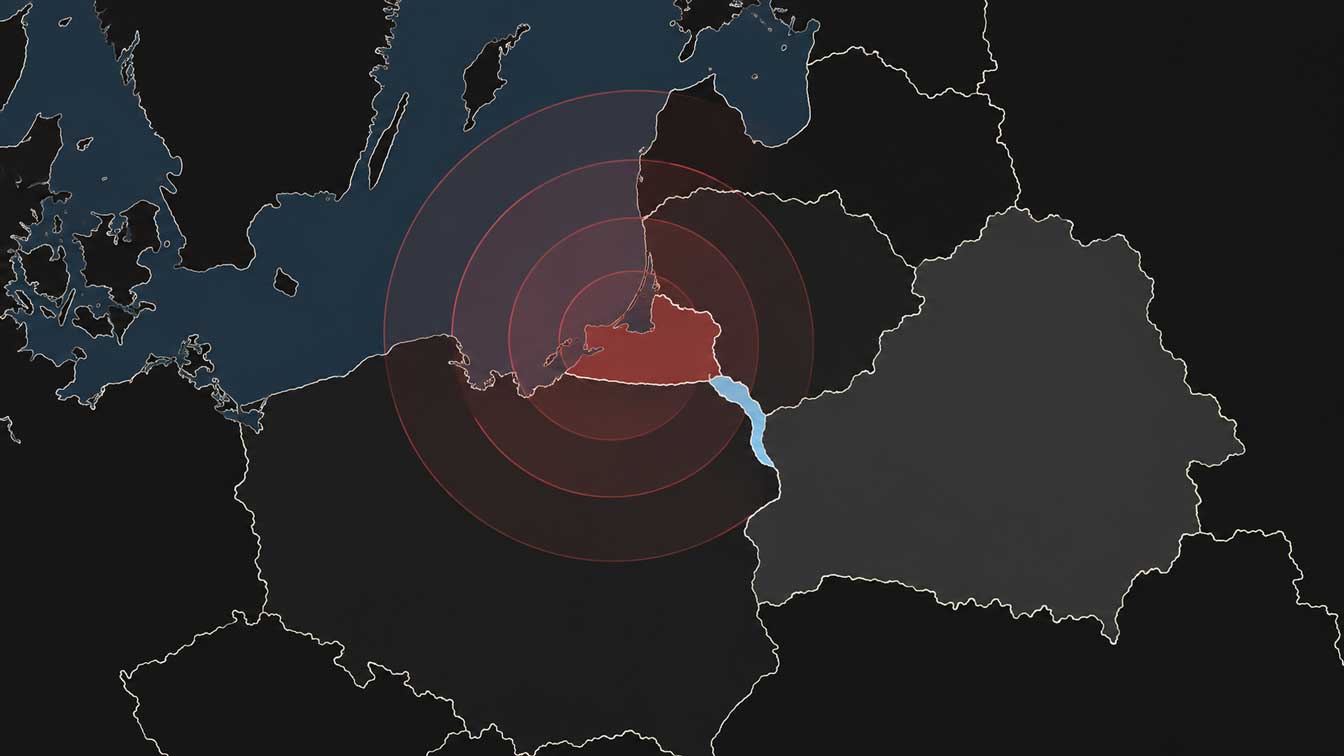
Located on the eastern shore of the Baltic Sea, and connected to the Atlantic Ocean through the North Sea and the Kattegat and Skagerrak straits, Kaliningrad Oblast is physically separated from mainland Russia and wedged between Poland and Lithuania. The former Königsberg is today one of the most sensitive pieces of Europe’s strategic landscape. Its importance lies not only in the military capabilities it hosts, but in its position within a space where Russia, Belarus, Poland, the Baltic States and NATO converge. A short distance away lies the Suwałki Corridor. Although they are geographically distinct, from a strategic perspective they form practically a single problem: the ability to maintain freedom of movement and reinforcement on Europe’s north-eastern flank.
The thesis of this analysis is as follows: Kaliningrad and Suwałki are two elements of the same strategic equation. What makes the enclave an instrument of deterrence is exactly what makes it a priority target in a crisis. And in today’s environment, that crisis need not begin with a ground offensive: it can begin with a cable, a drone or a substation.
A forward and vulnerable enclave
The strategic paradox
Kaliningrad is a strategic paradox. For Moscow, it is a forward position from which to project power over the Baltic Sea and shape the military space of northern Europe. At the same time, its geographic isolation makes the enclave one of the most exposed Russian territories in any conflict with NATO.
From Soviet space to Allied encirclement
The collapse of the Soviet Union radically transformed this environment. Kaliningrad ceased to be part of a vast Soviet strategic space and found itself almost entirely surrounded by members of the Atlantic Alliance. Finland’s and Sweden’s accession to NATO has further reinforced this shift in the regional balance.
Military value and exposure
The enclave nonetheless retains considerable military value. Its position and the capabilities deployed there allow Russia to try to constrain the access and freedom of manoeuvre of opposing forces in the Baltic. That is both its main strategic value and its vulnerability: the greater Kaliningrad’s ability to shape the regional environment, the more attention it receives in any crisis scenario.
Kaliningrad as an A2/AD architecture
What is A2/AD
Anti-access/area denial (A2/AD) is the set of surveillance, air defence, coastal defence and long-range strike capabilities that an actor deploys to prevent an adversary from entering an area (anti-access), or to make it costly, or from manoeuvring freely within it (area denial). Its aim is not conquest, but to raise the cost of approach until it shapes the adversary’s planning.
How the enclave weighs on the adversary’s planning
Relevance without an offensive
Kaliningrad does not need to become a platform for a major Russian offensive to be operationally relevant. Its mere existence, combined with surveillance, defence and long-range strike capabilities, forces the adversary to change its planning.
Raising the cost of approach
Its role is to raise the cost of approach, hinder the achievement of air and maritime superiority and constrain lines of communication and reinforcement. In operational terms, it acts as a node from which Russia can try to influence the battlespace even before ground forces make contact.
The fundamental contradiction
But this very capability creates a contradiction. Any operation to degrade its military capabilities would mean acting on Russian territory. The problem would then stop being purely conventional and move directly into the realm of escalation management.
“What makes Kaliningrad an instrument of deterrence can also make it a priority target during a crisis.”
— Antonio García, Senior Operations Coordinator (GPC), ACK3®
Suwałki: the other piece of the problem
It matters for its function, not its size
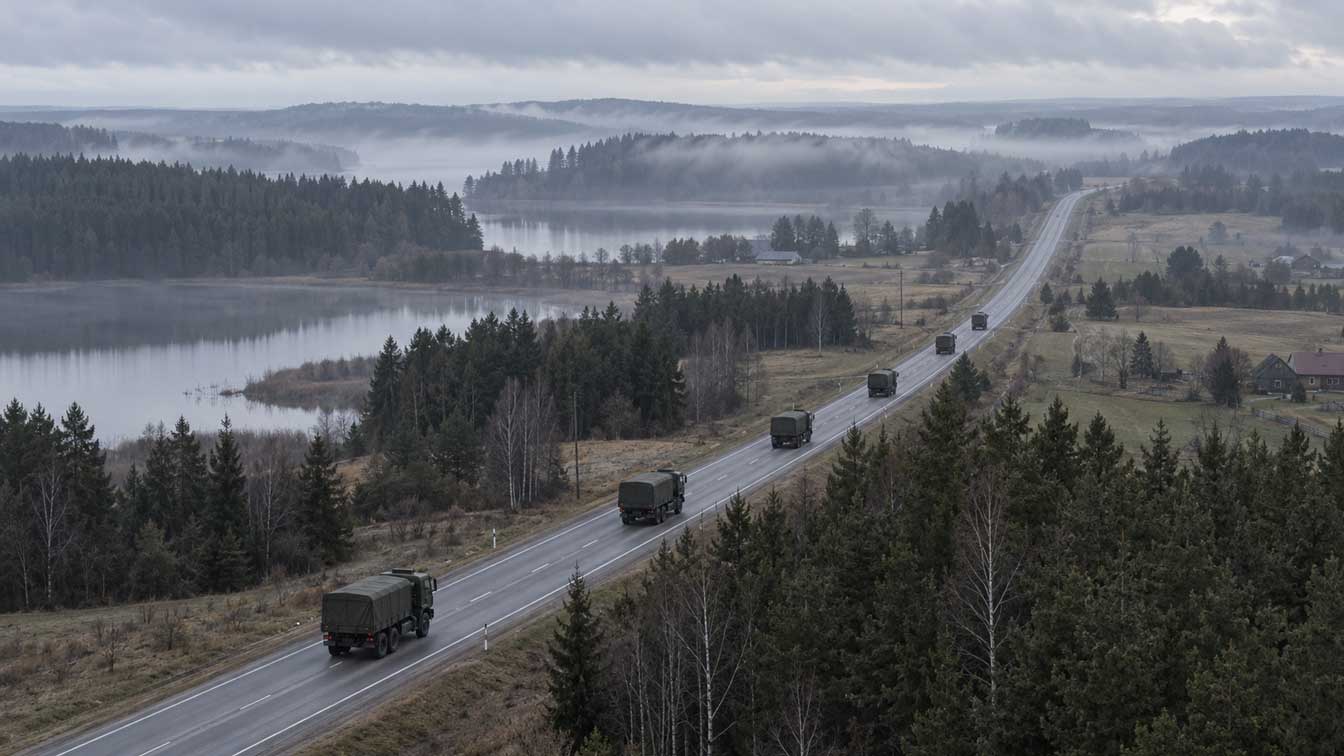
On the other side of the equation is the Suwałki Corridor, the border strip between Poland and Lithuania flanked by Kaliningrad to the west and Belarus to the east. It is one of the main land connections between the Baltic States and the rest of NATO and Europe. Cutting it would hamper the land reinforcement of Estonia, Latvia and Lithuania. The terrain and its transport links add complexity to any mobility and reinforcement operation.
The Center for European Policy Analysis describes Suwałki as a strip of some 65 kilometres between Belarus and Kaliningrad, crossed by only two narrow roads and one railway line. If the free movement of Allied personnel and materiel through that space were threatened, land reinforcement of the Baltic States would become exceptionally difficult.
Two pieces of the same equation
Kaliningrad and Suwałki are strategically interdependent. They are not just two points on a map: they are two elements of the same equation.
| Dimension | Kaliningrad | Suwałki Corridor |
|---|---|---|
| Nature | Russian enclave separated from the mainland | Land border between Poland and Lithuania, Allied territory |
| Strategic function | A2/AD node that constrains air and maritime access to the Baltic | Land continuity for reinforcing Estonia, Latvia and Lithuania |
| Moscow’s reading | Forward position whose defence requires significant resources | Space from which Allied reinforcement could isolate the enclave |
| Allied reading | Denial capability over the northern theatre’s lines of communication | Chokepoint whose loss would compromise collective defence |
| Risk in a crisis | Acting against it means acting on Russian territory | Cutting it would isolate the Baltic States by land |
From conventional war to the grey zone
The Allied reinforcement of the eastern flank
Since Russia’s annexation of Crimea in 2014, and especially since the invasion of Ukraine in 2022, this balance has changed profoundly. NATO has reinforced its presence on the eastern flank and today has nine multinational forward land forces, the latest established in Finland in June 2026, as well as air, maritime and integrated defence capabilities. But the transformation is not limited to conventional forces.
Forward Land Forces: the ninth formation
Forward Land Forces Finland began operations on 6 June 2026 under the command of the Supreme Allied Commander Europe, with Sweden as framework nation. They join those already deployed in Bulgaria, Estonia, Hungary, Latvia, Lithuania, Poland, Romania and Slovakia.
Competition between peace and war
Today’s operational environment begins long before the first exchange of fire. Cyber operations, electronic warfare, uncrewed systems, information operations, sabotage and attacks on critical infrastructure are part of a permanent competition between peace and war. In the Baltic, this dimension is especially relevant because of its undersea cables, energy infrastructure, communications networks and trade routes.
Undersea infrastructure: Baltic Sentry
The Allied response reflects this shift. NATO launched Baltic Sentry in January 2025, stepping up its maritime presence and the surveillance of critical undersea infrastructure with ships, patrol aircraft and uncrewed systems.
Baltic Sentry was activated on 14 January 2025 as a multi-domain activity to deter any attempt to damage critical undersea infrastructure in the Baltic, following damage in December 2024 to the cables linking Estonia and Finland.
— SHAPE — Baltic Sentry to enhance NATO’s presence in the Baltic Sea
Energy security: the Gizai case
State of play · September 2026
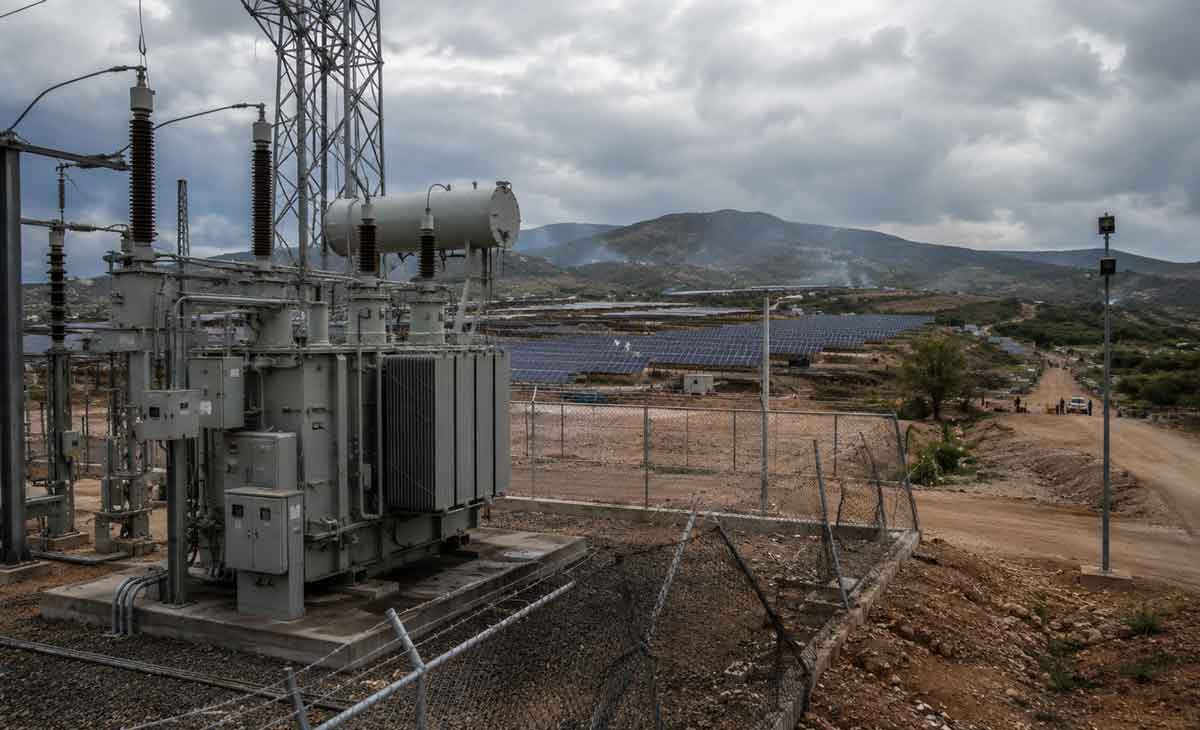
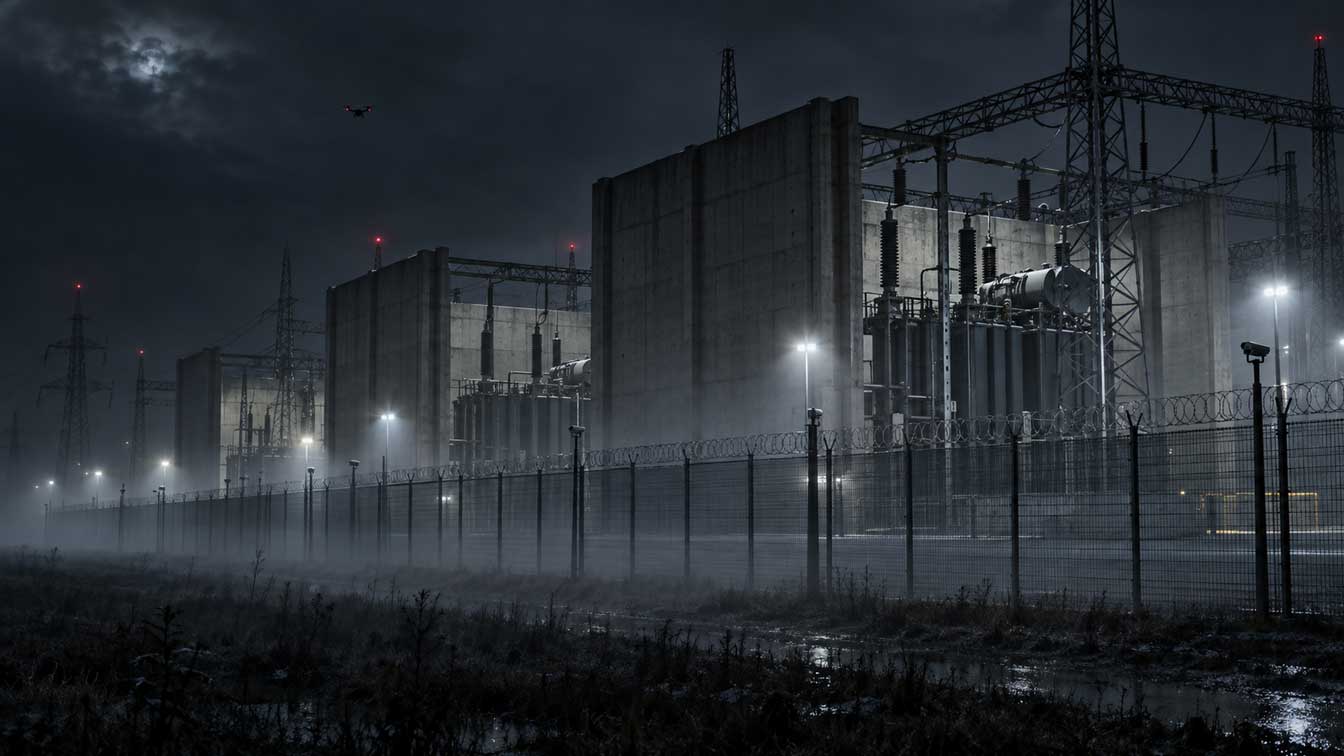
Lithuania plans to harden the future Gizai substation against drones. Located some 30 km from Kaliningrad, it is a node of the Harmony Link interconnector, which completes the integration of the Baltic grid with Europe’s. The design includes fencing able to withstand an explosives-laden vehicle, tunnel-detection sensors and reinforced concrete structures around the transformers. The Lithuanian Armed Forces are advising the operator, Litgrid, and the extra cost amounts to at least €48 million.
Energy security is now part of the same picture as military deterrence. Source: Reuters, via European Pravda (22 Sep 2026)
Timeline of change: 2014–2026
In little more than a decade, Kaliningrad’s surroundings have moved from a balance inherited from the post-Cold War era to a space of permanent competition. These are the milestones that explain the current scenario.
| Date | Milestone | Effect on Kaliningrad and Suwałki |
|---|---|---|
| 2014 | Russia annexes Crimea | NATO begins reinforcing its eastern flank. |
| February 2022 | Russia invades Ukraine | A step change in Allied deployment and in threat perception across the region. |
| April 2023 | Finland joins NATO | The land border between the Alliance and Russia grows substantially. |
| March 2024 | Sweden joins NATO | Almost the entire Baltic coastline is now held by Allied states. |
| December 2024 | Damage to undersea cables between Estonia and Finland | Undersea infrastructure becomes an established risk vector. |
| January 2025 | Baltic Sentry is launched | Permanent maritime surveillance of cables and pipelines. |
| February 2025 | The Baltic States disconnect from the Russian power grid | Kaliningrad becomes electrically isolated and the Baltic grid now relies on Europe. |
| June 2026 | Forward Land Forces Finland | NATO’s ninth multinational formation on the eastern flank. |
| September 2026 | Anti-drone hardening of the Gizai substation | Protection of energy infrastructure next to the enclave is designed to military standards. |
The likely triggers of a crisis
A future crisis in the Baltic would therefore not necessarily begin with a ground offensive. The real risk would arise when a limited incident is read as part of a wider campaign.
| Triggering incident | Escalation potential | Why it matters |
|---|---|---|
| Cyberattack on essential services | Medium | Slow and ambiguous attribution. Hard to calibrate a proportionate response. |
| Damage to an undersea cable or pipeline | Medium | Hits the energy and communications of several states at once. Immediate political pressure. |
| Airspace incursion or downing of a drone (UAV) | High | Demands decisions within minutes, with incomplete information and a risk of misidentification. |
| Naval incident or interception of a vessel | High | Direct contact between armed forces in a congested maritime space. |
| Sabotage of onshore energy infrastructure | High | Near Suwałki, it can be read as shaping the ground for a larger operation. |
The security dilemma
Two mutually reinforcing threat perceptions
This is one of the central elements of the scenario: two threat perceptions that can reinforce each other.
Moscow’s reading
NATO’s military build-up around Kaliningrad and Suwałki can be interpreted as preparation to isolate the enclave and, if necessary, neutralise its capabilities.
The Allied reading
NATO presents its reinforcement of the eastern flank as a defensive measure to guarantee deterrence and collective defence against possible aggression.
The action-reaction spiral
The result is the classic security dilemma: a measure one actor sees as defensive can be perceived as offensive by the other. The consequence could be a spiral in which both sides take measures that are rational from their own perspective while, at the same time, increasing overall instability.
| Phase | Action | The other side’s perception |
|---|---|---|
| 1 | NATO increases its capabilities to strengthen deterrence | Moscow reads it as evidence of a growing threat |
| 2 | Russia reinforces its own posture in and around the enclave | The Alliance sees its initial concerns confirmed |
| 3 | Further Allied reinforcement in response | The cycle restarts at a higher level of tension |
| 4 | A limited incident occurs in that context | Both sides read it as confirmation of the other’s intentions |
The nuclear factor and escalation management
Territory as a threshold
The nuclear factor adds a second layer of complexity. Kaliningrad does not need to host nuclear weapons for this dimension to be present in any crisis scenario. The decisive element is that the enclave is Russian territory, and any operation against its military capabilities would have to consider how Moscow might perceive a direct threat to the Russian Federation.
Crisis by accumulation
The key question would not only be the military effectiveness of a given action, but its impact on the adversary’s perception and on what follows. Strategic crises need not arise from a conscious decision to start a war either. They can build up by accumulation. A naval incident, the interception of a vessel, the downing of a drone, an attack on an undersea cable or an act of sabotage may initially trigger a limited response. The risk arises when that response is interpreted as the first move of a deliberate strategy.
From deterrence to pre-emption
“At that point, the logic of deterrence can start to give way to the logic of pre-emption: acting first to stop the adversary from acting later.”
— Antonio García, Senior Operations Coordinator (GPC), ACK3®
The most common framing error
Picturing the Baltic crisis as an armoured column crossing Suwałki. That scenario exists, but it is not the most likely starting point. The likely one is a severed cable, a downed drone, a sabotaged substation or an intercepted vessel, followed by a misreading of the other side’s intent. The risk lies not in the first incident, but in how it is interpreted.
Kaliningrad as an indicator of European risk
A node where everything converges
Kaliningrad should be understood as more than a Russian military enclave. It is a strategic node where geography, military power, logistics, critical infrastructure, trade, energy, deterrence and threat perception converge. For Russia, it is a forward position whose defence requires significant resources. For NATO, it is an area-denial capability positioned to shape the Baltic Sea and the lines of communication of Europe’s northern theatre. The fundamental problem is not who could occupy Kaliningrad or who could control the Suwałki Corridor. The real challenge is to prevent both spaces from becoming the breaking point of a deterrence system under growing pressure. If a crisis did occur, the initial aims of the parties might be limited, but the escalation dynamics might not be.
The geography stays the same; the balance does not
During the Cold War, Kaliningrad was part of a system defined by two clearly separated military blocs. Today the scenario is different, even though the geography is the same.
| Variable | Cold War | 2026 |
|---|---|---|
| Position of the enclave | Rear area of a vast Soviet space | Isolated territory surrounded by NATO states |
| Bloc structure | Two clearly separated military blocs | A NATO enlarged by Finland and Sweden facing Russia and Belarus |
| Regional actors | Poland and the Baltics inside the Warsaw Pact or the USSR | Poland with growing military weight; the Baltics building up their capabilities |
| Type of competition | Mainly conventional and nuclear | Conventional, nuclear and hybrid, with the grey zone as the first arena |
| Russian adaptation | Bloc doctrine | Posture adjusted to the lessons of the war in Ukraine |
Europe’s next crisis, if it ever comes, need not begin there. But if a large-scale military confrontation were to affect the Baltic Sea, both spaces would almost certainly play a significant role. Their importance comes not only from the kilometres between them, but from what losing freedom of action in that space would mean for both sides.
What it means for organisations exposed to the Baltic
For companies with operations, supply chains, energy assets or deployed staff in Poland, Lithuania, Latvia, Estonia or Finland, this scenario is not a geopolitical abstraction. A grey-zone incident can mean airspace closures, logistics disruption in the land corridor, connectivity outages or movement restrictions at short notice.
Exposure by sector
| Sector | Exposure | Likely impact of an incident |
|---|---|---|
| Energy and utilities | High | Assets that are direct targets of sabotage and hybrid threats. |
| Logistics and land transport | High | Dependence on a corridor with very few crossing routes. |
| Telecommunications and data | Medium | Degraded connectivity from undersea cable damage or cyberattacks. |
| Corporate travel and deployed staff | Medium | Airspace closures and movement restrictions at short notice. |
| Industry and construction | Medium | Supply delays, contractual penalties and work stoppages. |
The five most common mistakes when assessing Baltic risk
Most organisations do not fail because they ignore the risk, but because they measure it with the wrong framework. These are the mistakes we see most often.
| Mistake | Common? | Why it matters |
|---|---|---|
| Assuming NATO membership means low risk | Yes | The Alliance protects against armed aggression, not against sabotage, cyberattacks or logistics disruption. |
| Only planning for open war | Yes | The operational impact comes earlier, in the grey zone, and the organisation has nothing planned for that phase. |
| Not mapping dependence on the land corridor | Yes | Many supply chains to the Baltics run through Suwałki without anyone flagging it as a critical point. |
| Treating the region as a single bloc | Partly | A plant in Warsaw is not exposed in the same way as an energy asset on the Kaliningrad border. |
| Lacking a tested evacuation plan | Yes | With airspace closed and the corridor congested, improvising leaves staff with no viable way out. |
Preparing before the incident
Preparedness is not about predicting the crisis, but about having the tools in place before you need them.
Early warning indicators
Continuous tracking of incidents in the region and of signals that anticipate a change in tension, so you decide with time to spare, not under pressure.
Key question: Who warns you before it hits the news?
Continuity and logistics contingency
Alternative routes, back-up suppliers and plans that assume a temporary closure of the land corridor or the airspace.
Key question: What stops working if Suwałki closes for 72 hours?
Evacuation and communication protocols
Clear procedures to locate, communicate with and, if necessary, move deployed staff, with decision chains defined in advance.
Key question: Do you know where each person is and how to get them out without a plane?
Is your organisation ready for a crisis that starts in the grey zone?
ACK3® supports organisations operating on Europe’s eastern flank with strategic intelligence, environment monitoring, continuity planning and preparation of deployed staff.
| ACK3® service | What it delivers in the Baltic |
|---|---|
| Strategic risk consulting | Country and regional risk assessment, escalation scenario analysis and impact on operations and assets. |
| Crisis management and business continuity | Escalation protocols, evacuation plans and logistics contingencies for a closure of the land corridor or the airspace. |
| Travel Risk Management and monitoring | 24/7 monitoring from our global SOC in Madrid and early warning indicators for the Baltic region. |
| Specialist training (HEAT) | Preparing deployed staff to respond to incidents and make decisions under pressure. |
What really matters is not where a war would start, but how a limited incident could turn the space between Kaliningrad and Suwałki into a line of confrontation.
Sources: SHAPE — Forward Land Forces Finland (6 Jun 2026) · SHAPE — Baltic Sentry (14 Jan 2025) · CEPA — Securing the Suwałki Corridor · Reuters via European Pravda — Gizai substation (22 Sep 2026)