Strategic risks and opportunities in two decades of Belt and Road engagement
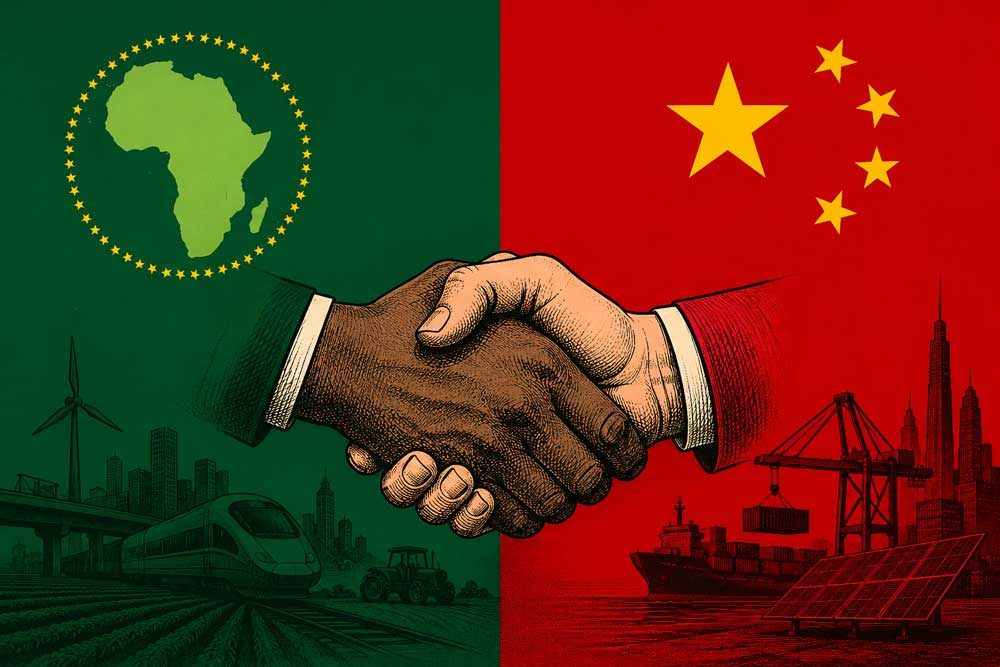
China has become Africa’s leading trade partner and one of its largest infrastructure financiers under the Belt and Road Initiative (BRI). What began as a peripheral commercial relationship is now a structural feature of the continent’s economy and geopolitics. Bilateral trade has expanded from roughly US$13 billion in 2001 to US$295.6 billion in 2024, and reached an estimated US$348 billion in 2025 — a year-on-year increase of 17.7% according to China–Global South Project data. Over the same period, Chinese lenders signed 1,319 loan commitments worth US$180.9 billion with 49 African governments and seven regional institutions, as tracked by the Boston University Global Development Policy Center.
African policymakers have not been passive recipients. Governments across the continent have negotiated project portfolios, set sector priorities, and leveraged China’s scale to advance national development goals — from industrial zones to transport corridors — while attempting to balance growth, fiscal discipline, and regional integration. For organisations operating in or entering African markets, the relationship is now too large to ignore and too complex to treat uncritically.
Estimated China–Africa bilateral trade in 2025, up ~17.7% year-on-year. China has been Africa’s largest trading partner for 16 consecutive years.
China–Africa engagement at a glance
| Indicator | Figure | Context |
|---|---|---|
| Bilateral trade, 2001 | ≈ US$13 bn | Baseline at the start of the FOCAC era |
| Bilateral trade, 2024 | ≈ US$295.6 bn | Roughly a 22-fold increase in two decades |
| Bilateral trade, 2025 | ≈ US$348 bn | +17.7% YoY; export-led growth |
| Chinese loan commitments, 2000–2024 | ≈ US$180.9 bn | 1,319 loans to 49 governments + 7 regional bodies |
| New Chinese lending, 2024 | ≈ US$2.1 bn | Sharp decline; shift to «selective engagement» |
| FOCAC 2024 financing pledge | ≈ US$50.7 bn | 360 bn yuan over three years (2025–2027) |
| Power generation built by Chinese firms | > 25 GW | >15% of sub-Saharan installed capacity |
Table 1 — Key indicators of China–Africa economic engagement
What is the Belt and Road Initiative?
The Belt and Road Initiative was announced by President Xi Jinping in 2013, drawing on China’s accumulated trade and investment experience and inspired by the ancient Silk Road routes that linked China to Europe, Africa, and the Middle East. Originally framed as the «Silk Road Economic Belt» and the «21st Century Maritime Silk Road,» the BRI was designed to deepen connectivity through infrastructure, finance, and trade. It has since evolved into a global strategy spanning more than 140 countries, with substantial engagement in Africa across railways, ports, energy networks, and industrial zones.
FOCAC: institutionalising the relationship
China’s engagement is reinforced through the Forum on China-Africa Cooperation (FOCAC), established in 2000 as the premier platform for reviewing progress, setting priorities, and strengthening ties. Crucially, FOCAC remains the only «Africa-plus-one» forum initiated at Africa’s own request, with an African co-chair and a venue that alternates between Beijing and African capitals.
The ninth FOCAC Summit was held in Beijing from 4–6 September 2024 under the theme «Joining Hands to Advance Modernization and Build a High-Level China-Africa Community with a Shared Future.» More than 50 African heads of state attended — one of the largest diplomatic gatherings China hosted that year. As analysts at the Carnegie Endowment note, the summit signalled a recalibration of China’s «checkbook diplomacy.»
Two outcomes stand out. First, China elevated the relationship to an «all-weather China-Africa community with a shared future,» upgrading bilateral ties with every African country holding diplomatic relations to at least the level of strategic partnership. Second, President Xi announced a financing package of approximately US$50.7 billion (360 billion yuan) over three years — including credit lines, aid, and investment — with priorities in infrastructure, clean energy, and industrial cooperation. Notably, and for the first time, the commitments were denominated in renminbi, a detail the Center for Global Development reads as a deliberate move to reduce dollar exposure.
Why this matters
The headline pledge was US$10 billion higher than 2021 but below the US$60 billion peaks of 2015 and 2018. Read alongside the collapse in actual new lending (just ~US$2.1 billion in 2024), the picture is not one of unconditional expansion but of selective, strategically targeted engagement — a shift that changes the risk calculus for borrowers and partners alike.
Sector transformation: from infrastructure to green technology
- Infrastructure connectivity: Railways, highways, and ports built with Chinese support continue to reshape regional logistics. Flagship projects such as the Addis Ababa–Djibouti railway, Kenya’s Standard Gauge Railway, and Zambia’s TAZARA line reduce transport times and improve port access. At FOCAC 2024, Zambia pressed for modernisation of TAZARA to strengthen mineral export routes to Dar es Salaam — an example of African governments steering investment toward national priorities.
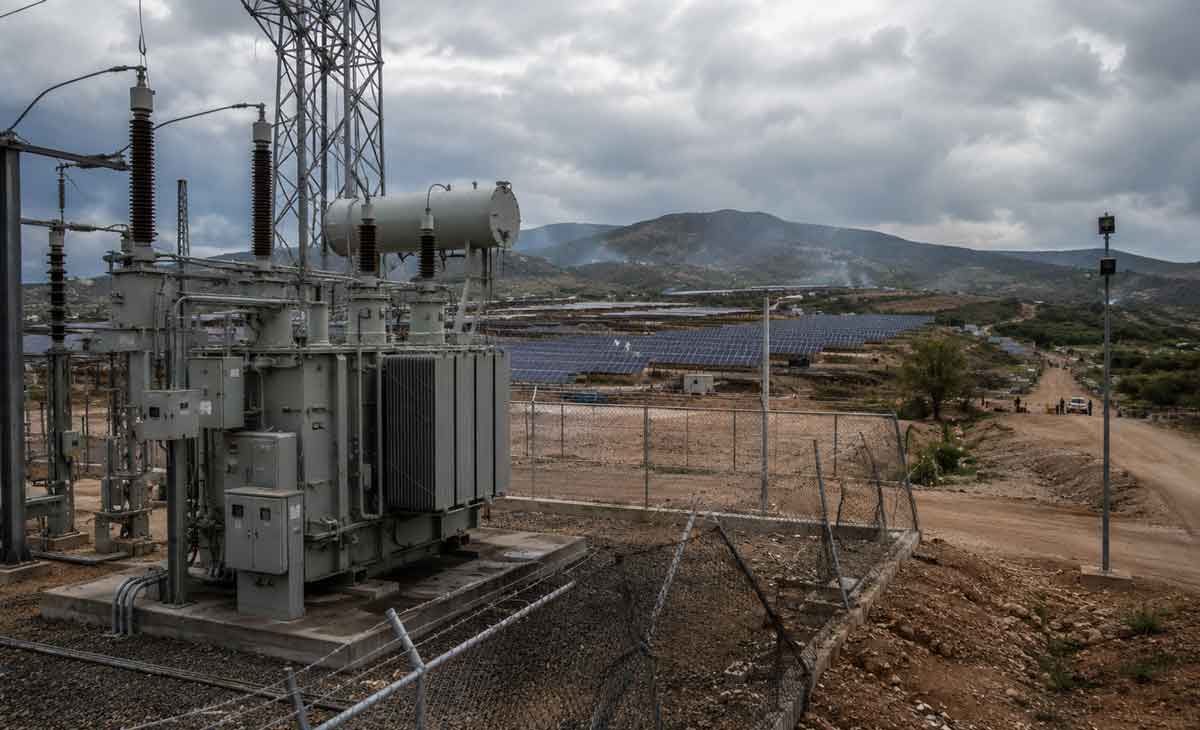
- Energy: China-backed energy projects span hydropower in Ethiopia, solar farms in Kenya, and transmission networks across Southern Africa. Chinese firms have installed more than 25 GW of generation capacity on the continent — over 15% of sub-Saharan Africa’s installed base. Solar is accelerating fastest: Africa imported roughly 15 GW of Chinese solar panels between mid-2024 and mid-2025, a 60% jump on the prior year.
- Industrial development: Special economic zones and industrial parks create jobs, build skills, and expand export capacity. South Africa used FOCAC to court investment in battery production and electric vehicles; Nigeria highlighted industrial corridors; Zambia emphasised mineral processing — each directing Chinese capital toward higher value-added activity.
- Digital expansion: The digital frontier is arguably the most transformative. Chinese firms — notably Huawei and ZTE — have built much of Africa’s 3G and 4G infrastructure and lead 5G deployment, alongside data centres in Ghana, Ethiopia, and South Africa and smart-city systems. Cheaper connectivity has underpinned the continent’s fintech and e-commerce boom and, for many users, represents the first gateway into the digital economy. It also raises questions over data governance, vendor dependence, and critical-infrastructure resilience.
The asymmetry problem: a widening trade deficit
Despite the depth of political and financial ties, the relationship remains structurally unbalanced. African exports to China are dominated by raw commodities — crude oil, copper, cobalt, iron ore, and timber — while Chinese exports to Africa are largely manufactured goods, electronics, machinery, and construction equipment.
The imbalance is widening, not narrowing. In 2025, Chinese exports to Africa rose by roughly 25.8% while African imports into China grew only 5.4%, pushing the continent’s trade deficit with China to its widest level on record. The 2025 surge is also partly a diversion effect: as the United States raised tariffs through 2025, Chinese manufacturers redirected goods toward emerging markets, with Africa a primary destination. For African industrialisation strategies, cheap manufactured imports cut both ways — lowering input costs while pressuring nascent domestic producers.
The strategic risk lens
For organisations, the opportunity set is real — but so is the risk surface. ACK3 frames China-Africa exposure across five dimensions that materially affect market entry, project finance, and operational continuity.
| Risk dimension | What it means | What to monitor |
|---|---|---|
| Debt & fiscal exposure | Several top borrowers (Angola, Ethiopia, Egypt, Kenya, Nigeria) carry concentrated Chinese debt loads | Restructuring talks, IMF programmes, sovereign rating actions |
| Lending recalibration | New lending has fallen sharply since 2016; «selective engagement» favours strategic partners | Project financing closures, RMB-denominated facilities, stalled pipelines |
| Trade asymmetry | Commodity-for-manufactures structure leaves African economies exposed to price cycles | Commodity prices, local-content rules, anti-dumping measures |
| Geopolitical realignment | US–China friction is reshaping African alignment and market access | Tariff regimes, bilateral framework agreements, sanctions exposure |
| Operational & regulatory | Project complexity, contract enforceability, data-governance and ESG scrutiny | Permitting, local partnership terms, environmental and labour compliance |
Table 2 — Strategic risk signals for organisations
The geopolitical dimension is moving fast. Following the 2025 US tariff turbulence, several African governments accelerated their pivot toward Beijing. In February 2026, South Africa and China signed a Framework Agreement on Economic Partnership for Shared Prosperity, deepening cooperation across mining, agriculture, renewable energy, and technology — a clear signal that trade-policy shocks in one bloc can rapidly redraw partnerships in another.
Opportunities and considerations for organisations
China’s engagement creates tangible openings across infrastructure, energy, industry, and digital services. Organisations can position themselves by:
- Conducting market and sector assessments to identify where Chinese investment is actually flowing — not where it was historically promised.
- Investing in local talent and partnerships aligned with national policies and local-content requirements.
- Evaluating financial, operational, and regulatory risk — including debt exposure, project complexity, currency, and counterparty concentration.
- Engaging in FOCAC-prioritised sectors — green technology, advanced manufacturing, and energy — to align with African development agendas and Agenda 2063.
- Building scenario plans for geopolitical realignment, given how quickly tariff and sanctions dynamics now reshape access.
A proactive, intelligence-led approach lets organisations capture the upside of emerging markets while mitigating the operational and strategic risks that accompany large-scale, politically charged investment.
Outlook: what to watch
- Execution of the FOCAC 2024 package — disbursement pace and sector allocation through 2027.
- RMB internationalisation in African trade and finance and its effect on dollar dependence.
- Debt sustainability in the most exposed economies and any new restructuring frameworks.
- The US–China–Africa triangle — how further tariff and alignment shifts redirect trade and investment.
- Localisation and value addition — whether processing and manufacturing genuinely move onshore in Africa.
Are you looking for actionable insights on China-Africa trade and investment trends?
At ACK3, our 24/7 Intelligence Operations Center delivers continuous market & strategic updates to help you navigate opportunities, sector priorities, and emerging risks across the continent. Stay informed on infrastructure developments, green technology initiatives, industrial projects, and digital transformation shaping Africa’s growth trajectory.
Sources
- Boston University Global Development Policy Center — Chinese Loans to Africa Database (2000–2024). bu.edu/gdp
- China–Global South Project — The 2025 China-Africa Trade Rundown. chinaglobalsouth.com
- Council on Foreign Relations — China in Africa: September 2024 (FOCAC). cfr.org
- Carnegie Endowment for International Peace — What FOCAC 2024 Reveals About the Future of China-Africa Relations. carnegieendowment.org
- Center for Global Development — Channeling the FOCAC 2024 Financing Pledge. cgdev.org
- tralac — 2024 FOCAC Summit Resources Page. tralac.org
- GIS Reports — China Expands Reach in Africa Through Trade. gisreportsonline.com
- General Administration of Customs of China, via gov.cn — China–Africa trade data. english.www.gov.cn